Routines
Routines That
Keep the System Alive
The minimal kitchen requires minimal maintenance — but only if the routines are right. Three rituals, totalling under thirty minutes per week, keep the system permanently intact.
Daily Routine:
The Five-Minute Reset
5 minutes
Performed after every cooking session. Not a deep clean — a reset. Returning the kitchen to its default state: surfaces clear, items in place, nothing pending.
Clear All Surfaces
Everything that arrived on the counter during cooking goes back to its place or into the dishwasher. The cutting board is cleaned and stored. The counter should look as it did before cooking began.
Wash As You Go
Any items not going in the dishwasher are washed immediately — not left to soak, not piled in the sink. A single pot or pan takes ninety seconds. Waiting until later takes five minutes and creates visual noise in the meantime.
Return Items to Place
Every tool and ingredient used during cooking returns to its designated location. The spice used in the sauce returns to the spice shelf. The pan returns to its vertical rack. Nothing migrates — ever.
Wipe Counters
A single pass with a damp cloth over all counter surfaces. Thirty seconds. The kitchen is now clean. This final step closes the loop and signals that the cooking session is complete — mentally as much as physically.
Weekly Reset:
The Twenty-Minute Review
20 minutes
Once per week, the kitchen receives a more thorough attention. Not a deep clean — a systematic review of the state of each zone. This prevents gradual drift from the minimal baseline.
Full Surface Clear
Remove every item from every counter surface. Wipe the surface. Return only the items that belong there permanently. If something has migrated to the counter during the week, return it to its correct zone.
Pantry Check
Scan the pantry for items approaching expiry, items that have been used partially and need using, and any items that have accumulated without belonging. Make a note of what needs to be purchased this week.
Appliance Wipe
Each appliance that lives on the counter receives a wipe. The kettle, the coffee machine if applicable. Appliances that haven't been used since last week should trigger a reassessment: do they still earn their counter space?
Organisation Audit
Open the key drawers and cabinets. Has anything become disorganised or misplaced? Spend sixty seconds returning items that have migrated. This prevents the gradual disorder that makes kitchens return to chaos within months of an initial organisation.
The Refresh
Replace the dish cloth or sponge. Empty the compost bin. Clean the drain. These three acts close the weekly reset and ensure the cleaning zone itself stays clean — the most commonly overlooked area in a minimal kitchen.
Mise en Place
Prepare Before
You Begin
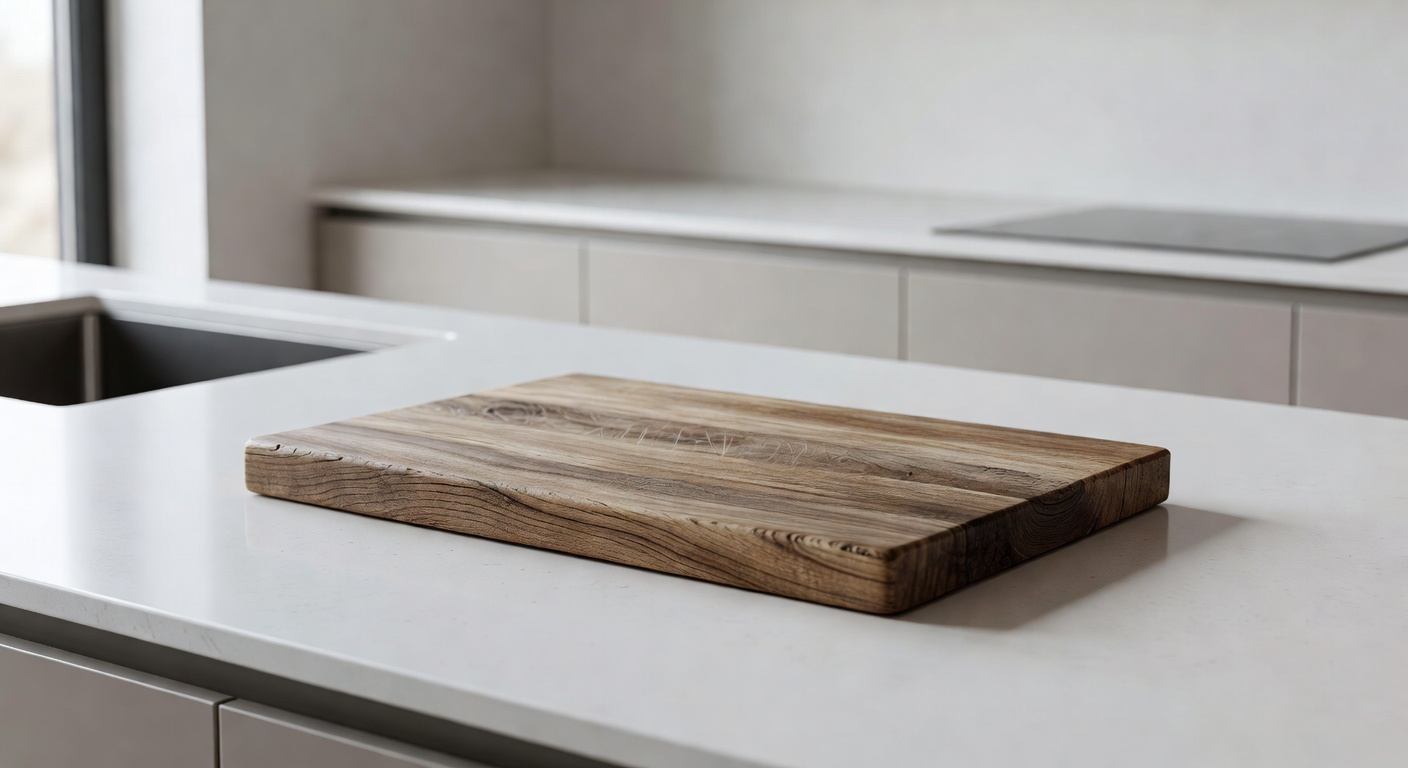
Mise en place — everything in its place — is the professional kitchen's most important routine. Before cooking begins, ingredients are prepped, measured, and arranged. Tools are laid out. The cutting board is the stage for everything that follows.
In the minimal kitchen, mise en place is effortless because there is nothing to move out of the way. The counter is already clear. The cutting board has a permanent home. Cooking begins with zero friction.
The Only Counter Decoration
Fresh Herbs:
Function as Aesthetic
A small kitchen herb garden — basil, parsley, chives — is the only decoration the minimal kitchen needs on its counter. It satisfies the visual need for life and greenery while serving a genuine culinary function every day.
The herb garden passes both the function test and the aesthetics test. Everything else that aspires to be counter decoration typically fails the function test and rarely passes the aesthetics test either.

Monthly
The Monthly
Deep Edit
Once per month, spend thirty minutes reviewing your kitchen against the month just passed. The question is simple: what was used and what wasn't?
Review Item Usage
Think back through the month's meals. Which tools were reached for daily? Which haven't been touched? Items unused for a full month move to the review pile — not automatically removed, but questioned.
Remove What Wasn't Used
Apply the one-week rule retrospectively to the past month. Items unused for four consecutive weeks are strong candidates for removal. Act on the list immediately — the decision has already been made by your behaviour.
One In, One Out
If a new item has entered the kitchen this month — a gift, a purchase, a trial — identify which item it displaces. Every entry must produce an exit. The volume of the kitchen is capped permanently.
The Foundation
Routines Rely on
Good Philosophy
These routines only work if the thinking behind them is understood. The philosophy page explains the principles that make the system sustainable long-term.
Read the Philosophy