Guide 03
The Only Appliances
You Actually Need
Appliances are the biggest consumers of kitchen space and the most difficult items to remove. This guide gives you a framework for deciding what stays and a clear list of what typically doesn't.
Decision Framework
Three Questions to Ask
About Any Appliance
Do I use it at least twice a week?
If an appliance is used less than twice per week, it earns no counter space. If it's used less than once per week, it should be evaluated for removal entirely. Regular use is the fundamental criterion.
Does something I already own do this?
A stovetop performs the function of a rice cooker, slow cooker, and hotplate. An oven performs the function of an air fryer. Before any appliance earns its place, the existing setup must be unable to replicate its function adequately.
Is the space cost justified by the function?
A breadmaker uses as much counter or cabinet space as twelve essential tools. The question is whether the function it performs is worth that displacement. For most households, it is not.
Keep
The Essential
Appliance Set
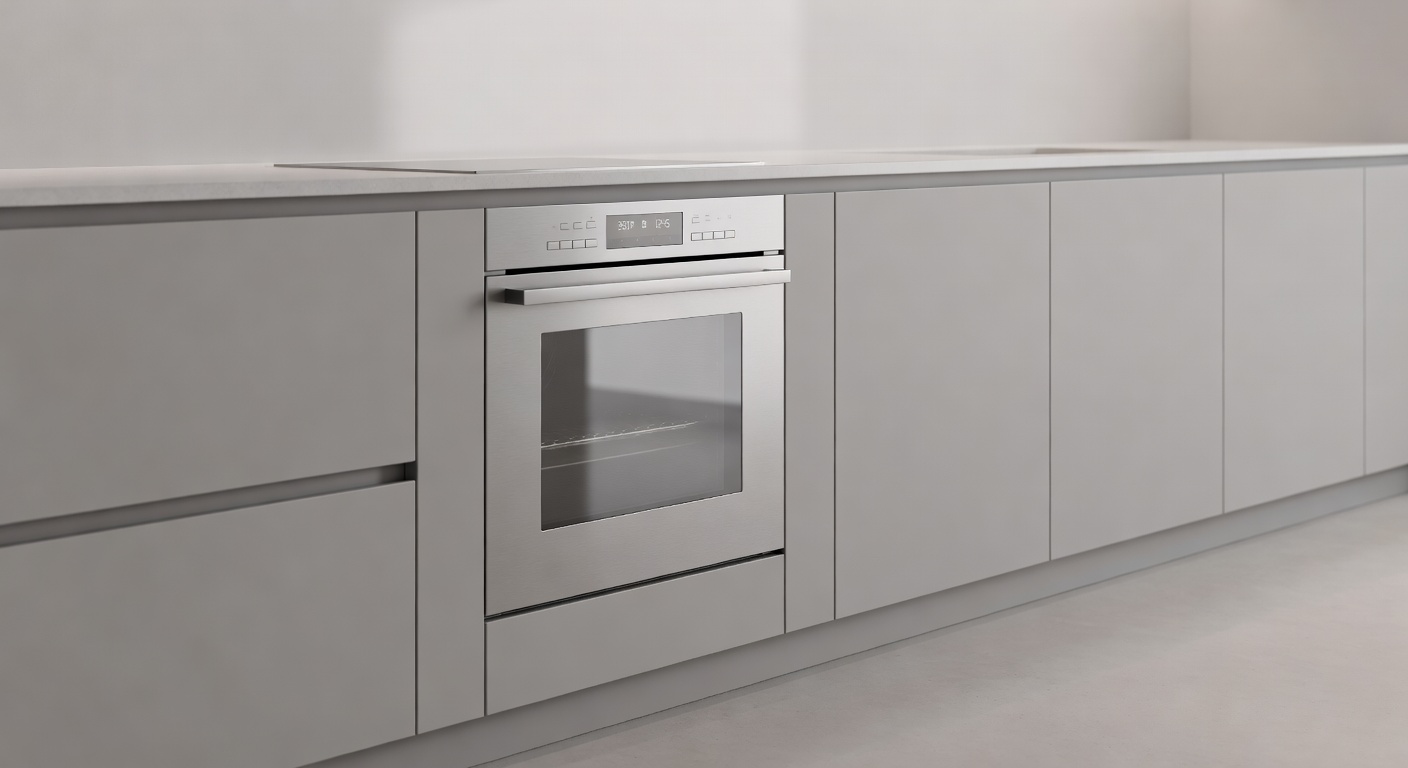
Built-in Oven & Stove
The irreplaceable centre of the minimal kitchen. An integrated oven-stove unit provides every heat cooking method — roasting, baking, searing, boiling, steaming — without requiring any additional appliances. A quality range makes twelve other appliances unnecessary.
Induction cooktops are preferred in minimal kitchens: faster, cleaner, and easier to wipe down than gas or ceramic. The lack of grates means a surface that resets to clean in seconds.
Refrigerator
The only cold storage appliance required. A well-organised refrigerator supports the lean pantry approach: FIFO rotation, clearly visible contents, no forgotten items. Panel-ready models integrate into cabinetry to reduce visual disruption.
Kettle
The fastest way to boil water. Used for tea, coffee, instant oats, blanching, and warming liquids before adding to pans. A quality electric kettle is used daily in most households — it earns its counter space with exceptional frequency of use.
Blender
A high-quality blender handles soups, smoothies, sauces, and dressings. A single powerful blender replaces hand blenders, food processors (for most tasks), and nut-milk machines. Buy one excellent blender. Use it completely.
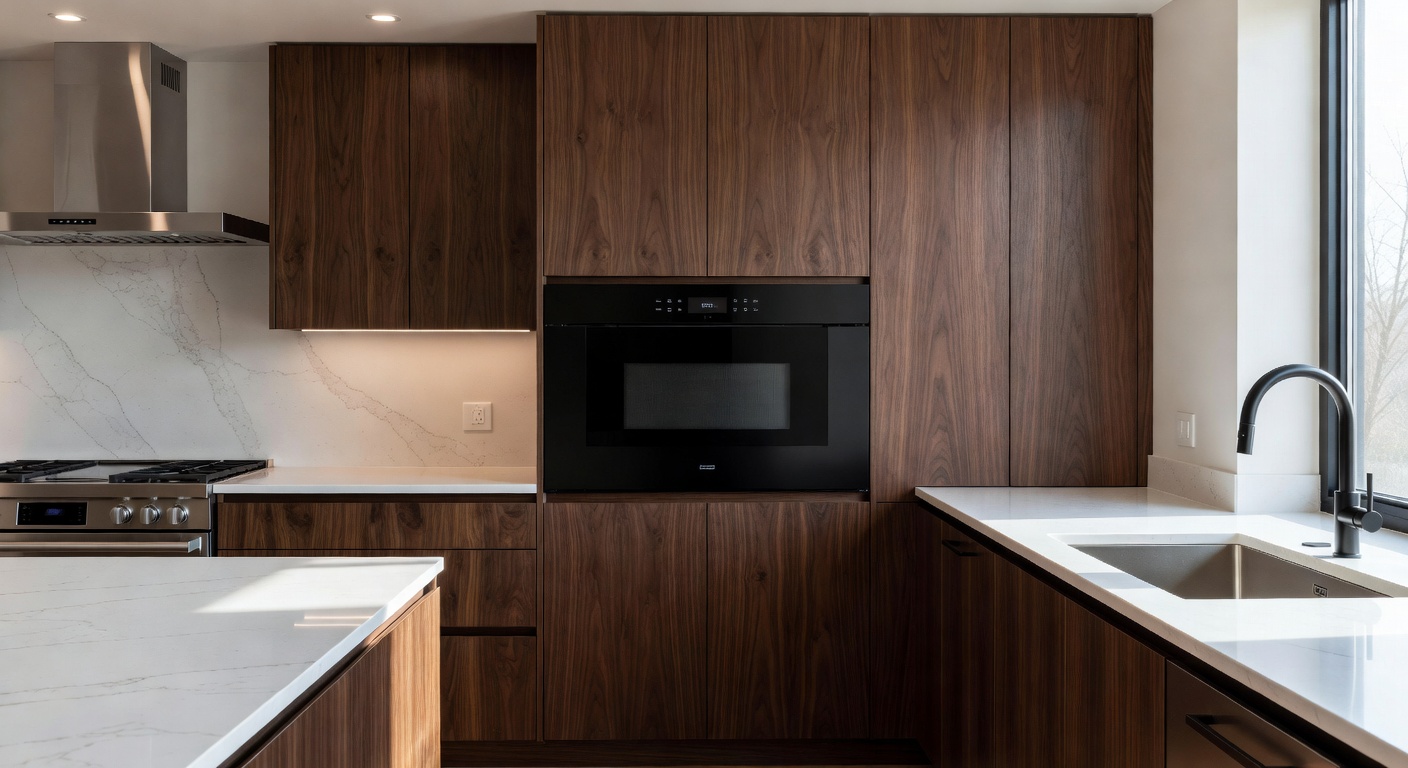
Toaster or Toaster Oven
Justified if used for breakfast daily. A toaster oven adds versatility — small batches, reheating, and browning — that can reduce oven use for small portions. Choose one or the other, never both.
Consider Removing
Appliances That
Rarely Justify Their Space
These are not inherently bad appliances. They are simply appliances that, for most households, consume more space than they provide value. Evaluate each against your actual usage.
Air Fryer
An oven with a convection setting replicates air fryer results with superior capacity. Unless you cook air fryer meals daily, the counter footprint is not justified.
Bread Maker
A Dutch oven in a conventional oven produces superior bread. A bread maker is a single-function appliance the size of a microwave that most owners use fewer than ten times per year.
Juicer
A citrus press covers 90% of juicing needs. A high-powered blender handles green juices when strained. A centrifugal juicer is large, difficult to clean, and used rarely after the initial enthusiasm.
Egg Cooker
A saucepan boils, poaches, and scrambles eggs. The egg cooker performs a function the cooktop performs equally well. There is no justification for both in a minimal kitchen.
Waffle Iron
The quintessential special-occasion appliance that occupies permanent space for quarterly use. Store off-site or donate — waffles don't require counter real estate 363 days per year.
Rice Cooker & Sandwich Press
A pot with a lid cooks rice perfectly. A cast iron pan or griddle presses sandwiches. Neither of these speciality appliances performs a function the stovetop cannot replicate.
Counter Space Rules
Only Appliances Used
Three Times Per Week Earn Counter Space
The Frequency Test
Counter space in the minimal kitchen is reserved for appliances used at minimum three times per week. Everything else — regardless of how useful it is during use — lives in a cabinet or pantry. The kettle earns the counter. The blender might. The stand mixer probably doesn't.
Cabinet vs. Counter Decision
If an appliance is used twice weekly or less, it belongs in a cabinet. If it requires more than thirty seconds to retrieve and set up, its counter placement should be reconsidered. The ease of retrieval must be weighed against the permanent cost of counter occupation.
Next
Organise What
Remains
Once you've decided what to keep, the smart storage guide helps you find the right place for everything — maximising space and minimising retrieval time.
View Smart Storage