Kitchen Layout
Designing the
Minimal Kitchen
Work Triangle
The Triangle That
Defines Efficiency
The kitchen work triangle connects the three primary work points — sink, stove, and refrigerator — into a relationship that governs how efficiently you move while cooking. In a minimal kitchen, this triangle is kept tight: ideally, the total perimeter of the triangle should measure between 4 and 9 metres.
Too large a triangle means unnecessary movement. Too small means working in a cramped space. The optimal triangle allows you to pivot between tasks without crossing the kitchen — a functional geometry that reduces both effort and time.
Every other element of the kitchen is arranged in service of this triangle. The preparation zone sits between sink and stove. Storage sits behind and beside the triangle, not through it.
Zone-Based Design
Four Zones,
Perfect Clarity
A zone-based kitchen means everything lives where it is used. Nothing travels across the kitchen. Nothing is stored out of context.
Preparation Zone
The counter space between the sink and the stove. This is where raw ingredients are handled, cut, and assembled.
- Cutting board
- Knife block or magnetic strip
- Mixing bowl (stored nearby)
- Peeler, grater, scale
Cooking Zone
Centred on the stove. Everything needed during active cooking lives here — within arm's reach of the burners.
- Pans and pots
- Utensils (spoon, tongs, spatula)
- Oils and salt
- Oven mitts
Storage Zone
The pantry, refrigerator, and dedicated cabinets. Organised so that everything is visible, accessible, and regularly rotated.
- Pantry staples
- Refrigerated items
- Dry goods in containers
- Less-used appliances
Cleaning Zone
Centred on the sink and including the dishwasher. All cleaning materials are stored in this zone only — nowhere else.
- Dish soap and brush
- Cloths and sponges
- Recycling and compost
- Under-sink storage
Integrated Appliances
Appliances That
Disappear into the Space
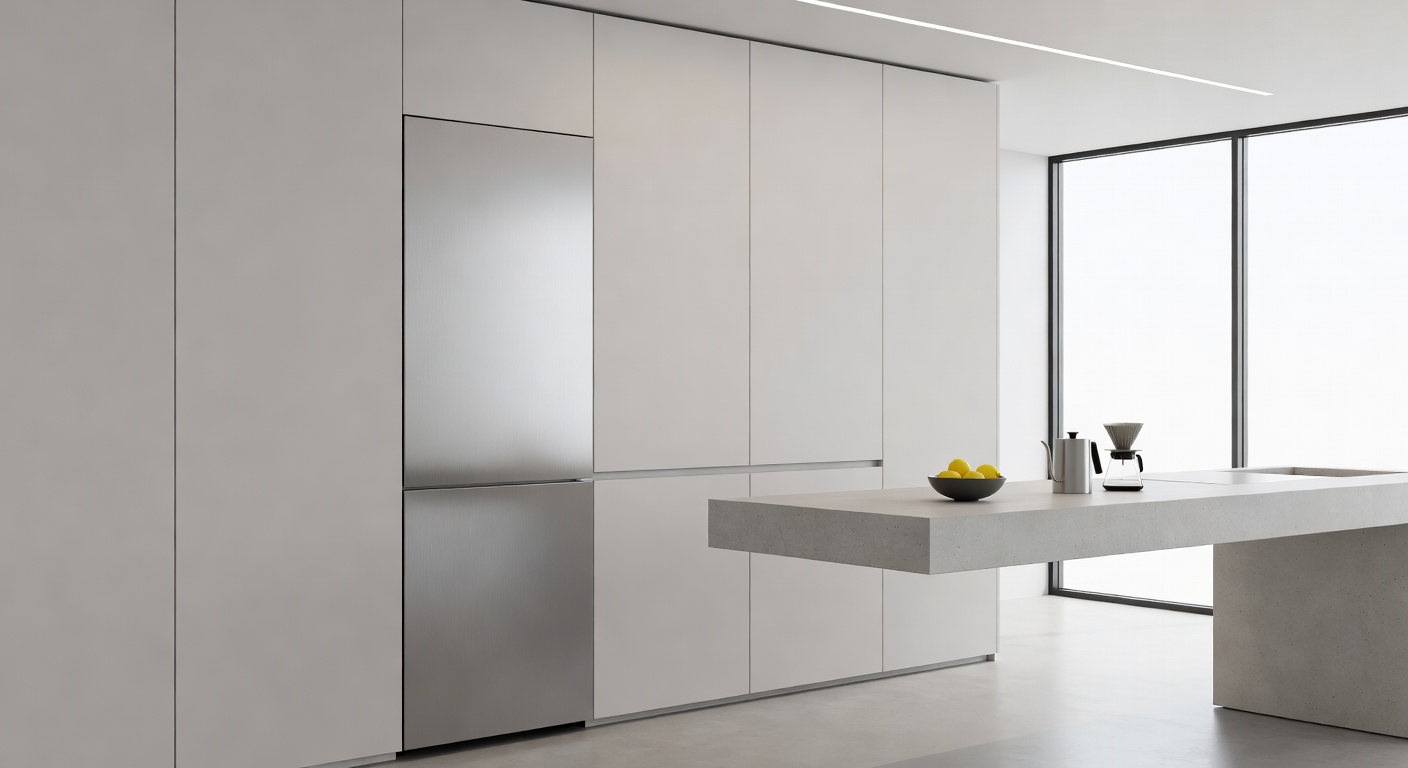
Panel-ready refrigerators and built-in ovens reduce visual disruption in the minimal kitchen. When appliances share the same surface language as the cabinetry, the eye moves smoothly across the space rather than stopping at each machine.
Integration also clarifies the zones: when the refrigerator is fully enclosed within the cabinet run, the storage zone becomes a coherent, contained unit rather than an object sitting in the room.
The Cleaning Zone
The Compact
Dishwasher Principle
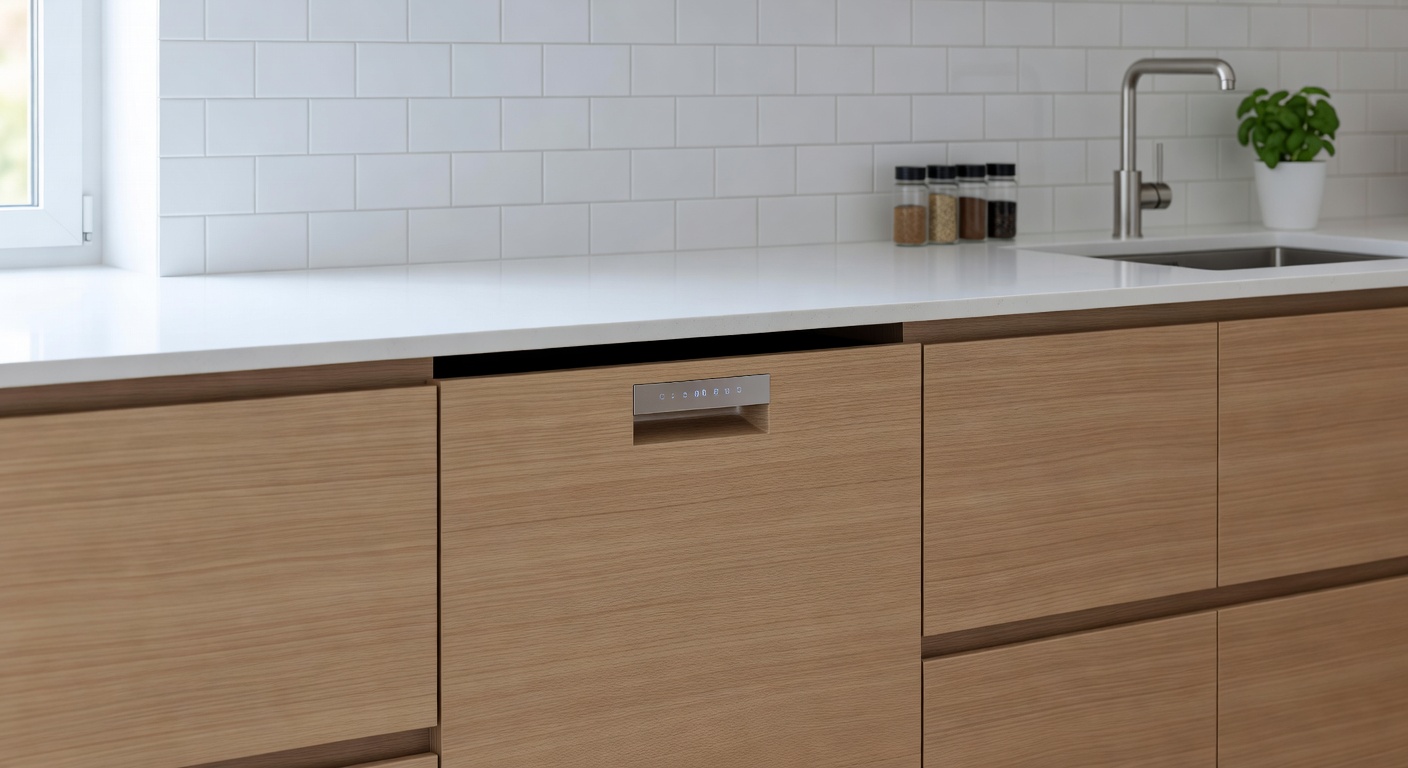
A compact, fully integrated dishwasher is the correct appliance for a minimal kitchen. It handles the cleaning load of a household with twelve tools without occupying the visual and physical footprint of a full-size unit.
In the minimal kitchen, the cleaning zone operates on a simple principle: wash, dry, put away. Dishes do not stage on the counter. The zone resets to zero after every use — a physical expression of the surface-zero rule applied to the entire kitchen.
Counter Principles
Only What Is Used
Every Day
The counter is not a storage surface. It is a working surface. Only items used at minimum three times per week earn permanent counter placement. A kettle used every morning. A knife block used every time you cook. Everything else lives in a drawer or cabinet — out of sight, completely accessible, never in the way.
The rule of zero visual clutter does not mean the counter must be sterile. It means every object on the counter is there by deliberate choice, not by inertia.
Layout Tips
Six Principles for
Better Layout
Work Triangle First
Plan all other elements around the sink-stove-fridge triangle. Keep total perimeter under 9 metres for efficient movement.
Zone Before Organising
Assign each item to a zone before deciding where to store it. The zone determines the location. The location never changes.
Doors That Don't Conflict
Cabinet doors, appliance doors, and the dishwasher should never block each other when open. Plan for simultaneous use.
Eye-Level for Daily Items
Store items used every day between hip and shoulder height. Reserve overhead and floor-level for rarely used items only.
Drawer Depth Matters
Deep drawers for pots, shallow drawers for utensils. Match drawer depth to item height to prevent wasted vertical space.
Lighting at Work Zones
Under-cabinet task lighting at the preparation zone eliminates shadows and reduces error during detailed cutting work.
Ready to Begin?
Talk to Us About
Your Kitchen
Every kitchen is different. If you would like personalised guidance on applying zone-based layout principles to your specific space, we are here.
Get in Touch