Guide 04
The Minimal Pantry:
Stock Less, Cook More
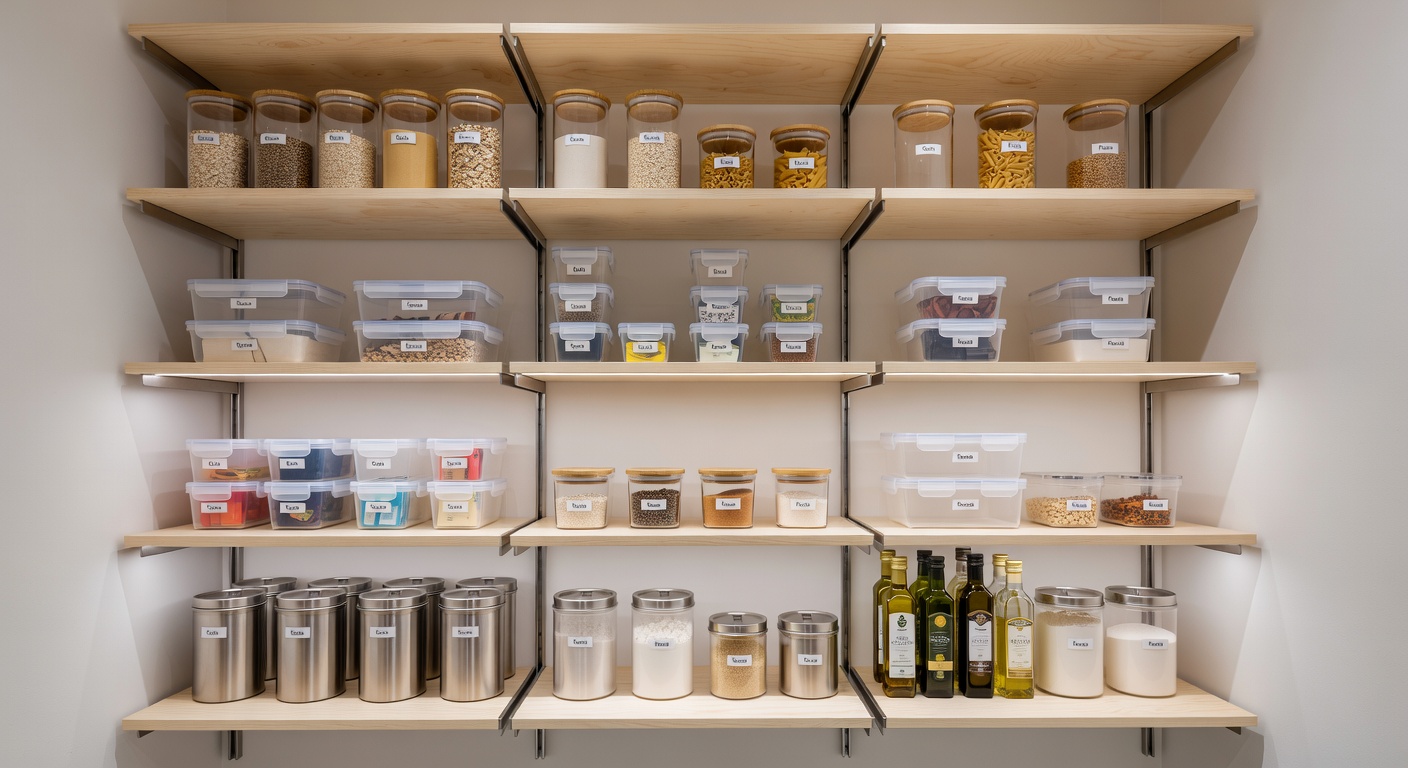
A lean pantry is not an empty pantry. It is a pantry where every item is used regularly, nothing is duplicated, and shopping becomes simpler because you always know what you have.
The conventional pantry accumulates by accident. A jar of tahini bought for one recipe, a specialty sauce purchased on impulse, spices from three countries used once each. A lean pantry is built by design: forty curated items that work across hundreds of meals, purchased regularly, used completely, and replenished precisely.
The 40-Item Pantry
Everything You Need.
Nothing You Don't.
Grains & Pasta
- Arborio rice
- Basmati rice
- Rolled oats
- Pasta (spaghetti)
- Pasta (penne)
- Couscous
- Lentils (green)
- Chickpeas (dried)
Canned & Jarred
- Whole plum tomatoes
- Coconut milk
- Chickpeas (tinned)
- White beans
- Tuna in olive oil
- Sardines
- Tomato purée
- Anchovies
Oils & Condiments
- Extra virgin olive oil
- Neutral oil (sunflower)
- Red wine vinegar
- Soy sauce
- Dijon mustard
- Honey
- Worcestershire sauce
- Hot sauce
Spices
- Sea salt flakes
- Black pepper (whole)
- Smoked paprika
- Cumin (ground)
- Coriander (ground)
- Dried chilli flakes
- Dried oregano
- Nutmeg (whole)
- Bay leaves
- Turmeric
Baking
- Plain flour
- Baking powder
- Baking soda
- Caster sugar
- Dark chocolate (70%)
- Vanilla extract
The Philosophy
Stock Intentionally,
Never Speculatively
The minimal pantry is stocked on the basis of meals you actually cook — not meals you aspire to cook. Every item on the list above features in at least five distinct meals. Nothing is purchased for a single recipe.
When a specialty ingredient is needed for a specific dish, it is purchased, used completely, and not restocked unless it proves itself useful for at least three other meals in the household's regular rotation.
Storage Solution
The Sliding Pantry
Maximises Depth
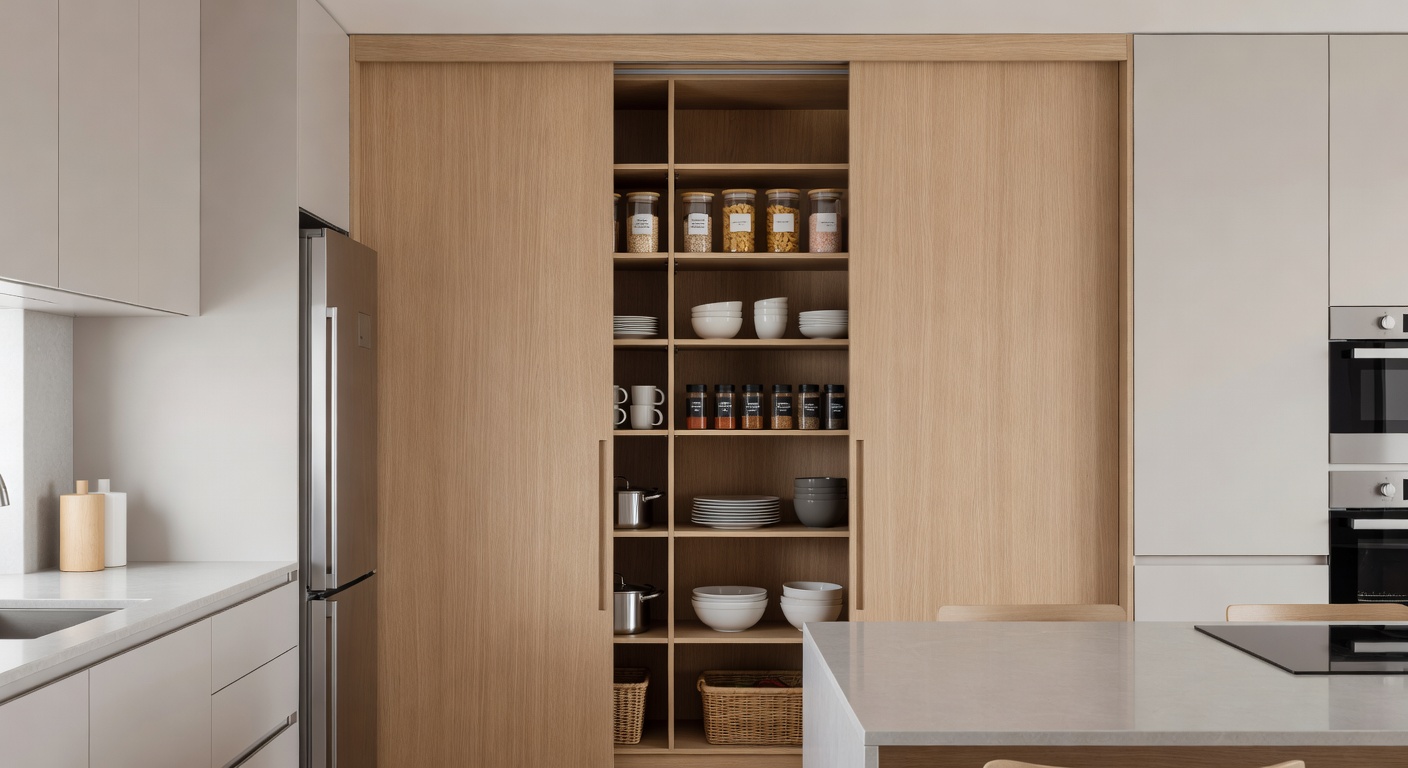
A compact sliding pantry extracts maximum storage from minimum floor space. Items at the back are as accessible as items at the front. Every shelf is visible at a glance. The sliding mechanism means nothing is buried, lost, or forgotten.
For kitchens without dedicated pantry space, a tall, narrow cabinet with pull-out shelves on rails achieves the same result. The principle: every item must be visible without moving another item.
Organisation Principles
Four Rules for a
Pantry That Stays Minimal
Uniform Containers
Decant grains, pulses, and dry goods into identical glass or clear containers. Uniform containers make the pantry scannable at a glance and prevent the visual chaos of mismatched packaging.
Label Everything
Every container receives a label with its contents and purchase date. Labels prevent the twin problems of mystery ingredients and forgotten expiry dates. A labelled pantry is an honest pantry.
FIFO Rotation
First in, first out. New stock goes behind existing stock. Older items are always at the front and used first. This simple rotation eliminates the most common cause of pantry waste: items expiring at the back of a shelf.
Monthly Audit
Once per month, spend ten minutes reviewing the pantry. Check expiry dates, consolidate duplicates, and remove anything that hasn't been touched in sixty days. The monthly audit prevents gradual accumulation.
What to Remove
Common Sources of
Pantry Clutter
Expired Items
Anything past its best-before date. Check every item. Spices over 18 months old have degraded significantly in flavour — replace them with fresh, or eliminate the spice if it isn't in regular use.
Duplicate Functions
Three vinegars, two soy sauces, multiple chilli pastes that serve the same role in cooking. Consolidate to the best, most versatile option in each category and remove the duplicates.
Single-Use Specialty Items
Ingredients purchased for one recipe that have sat untouched since. If it has been in the pantry for more than sixty days and hasn't featured in a meal, it is pantry clutter.
Gift Items
Specialty jams, flavoured oils, unusual condiments received as gifts. Consume them, gift them on, or discard them. They accumulate shelf space and create the illusion of a full, productive pantry.
Aspirational Ingredients
The specialty flour for bread you haven't made. The dried mushrooms for the risotto you'll cook someday. If it's been more than three months and you haven't made the dish, remove the ingredient.
Excess Stock
Multiple cans of the same item purchased during a sale. Stock beyond a two-week supply of any single item creates a pantry inventory problem. The lean pantry avoids bulk-buying habits.
Next Step
Now Organise
Your Storage
The smart storage guide covers drawers, cabinets, and the counter discipline that keeps a minimal kitchen functioning long-term.
View Smart Storage